
Metchosin Farm
SalalCommon
Salal
Common3-5 years to fruit
Certified Organic
Couldn't load pickup availability
Gaultheria shalon
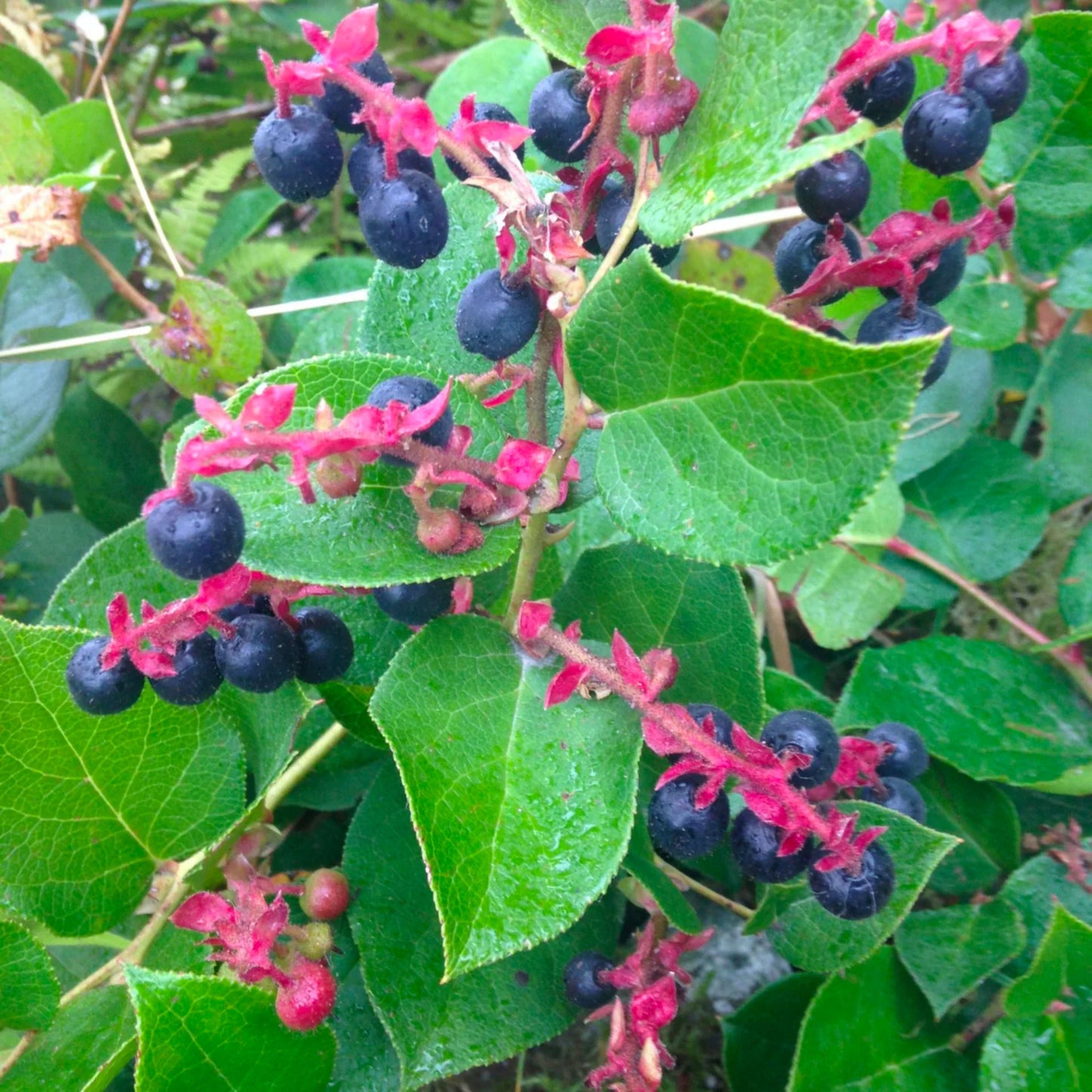
Salal is a much-loved understory plant native to the Pacific Northwest, thriving in the cool, moist forests of British Columbia. This evergreen perennial produces glossy green leaves and clusters of small, bell-shaped pinkish-white flowers, followed by dark purple, blueberry-like fruit. The berries are sweet and slightly earthy, perfect for fresh eating or preserving. Salal also plays an important ecological role, offering food and shelter to birds, pollinators, and small mammals. Grow best in acidic, well-drained soils with partial to full shade.
Certified Organic
A note about germination rates for Native Seeds
Our native seeds are not germination tested, as both germination rates and time to germination can vary significantly compared to commercial seed varieties. Many native seeds require specific pre-treatments—such as cold stratification, exposure to light, or temperature fluctuations—to successfully germinate.
Additionally, many native perennial plants may take several years to mature and begin flowering.
For best results, please refer to our Growing Tips for strategies to support successful germination.
Tips for planting out native seeds:
- Sow your seed in the Fall, as Nature would. If you don’t want to be patient, then putting your seeds in some damp soil in the fridge for 4-6 weeks can also help germination as they benefit from a cold period.
- While there are technical tips that can be followed for each native species, we find generally good success by sowing seeds in a pot of sterilized potting soil in early Fall, and sinking the pot or tray into the ground in your garden where it can stay for 1-3 years.
- Cover your seeding tray/pot with a fine wire mesh to keep out mice, squirrels, rabbits, cats and other critters who may want to nibble seedlings or dig up the nice potting soil.
- When seedlings emerge in the Spring, prick them gently out with a fork once they have two sets of leaves (this indicates good root development so they survive transplanting better), then transplant them to their final location and water in well.
- Leave the pot in place, and over the next couple of years it’s easy to continue pricking out new seedlings to transplant as they emerge.
Share