
WoodGrain Farm
KaleEthiopian
Kale
Ethiopian25 days baby, 40 days full size
Certified Organic
Couldn't load pickup availability
Brassica carinata
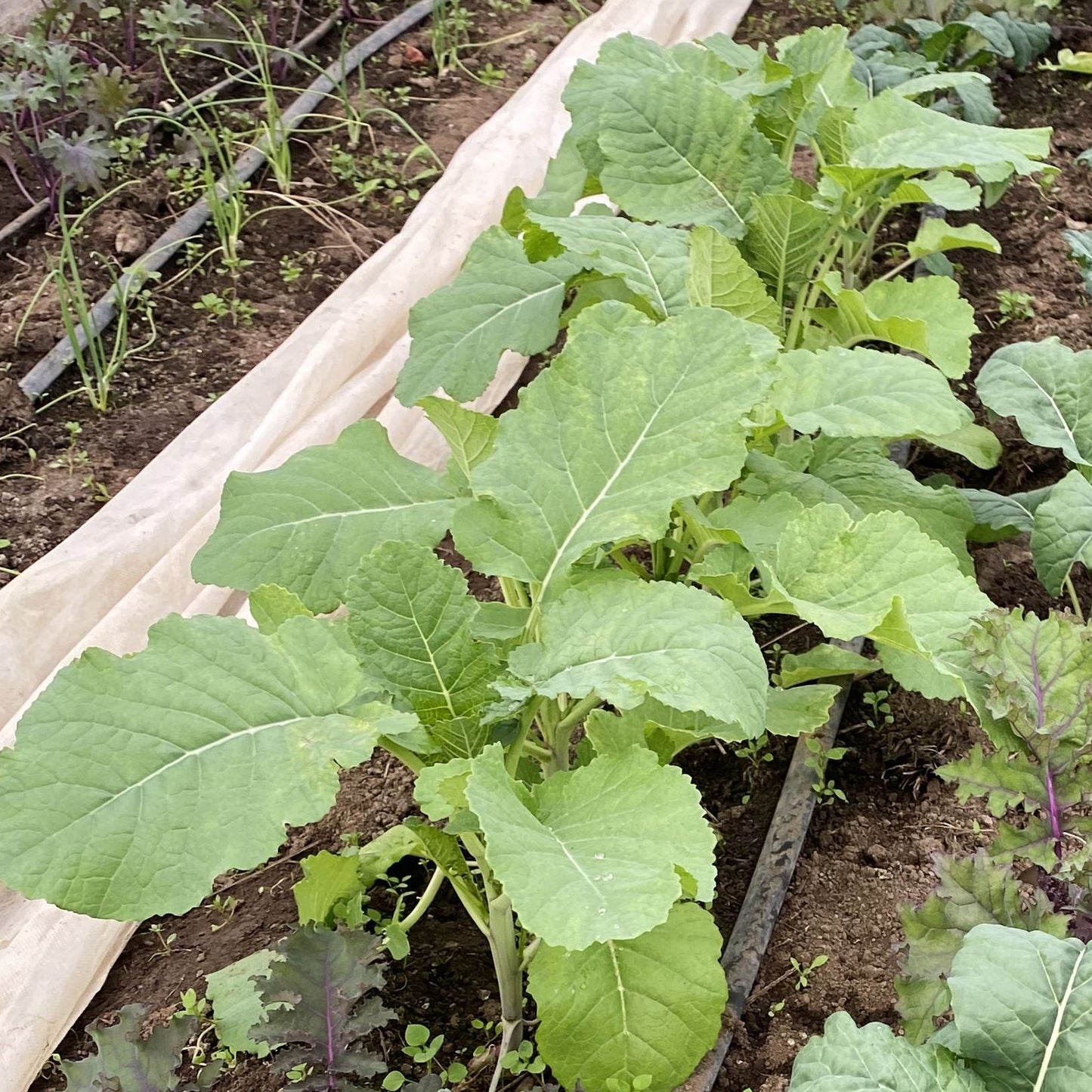
Early, vigorous and exceptionally tender, Ethiopian kale is not just another kale, it’s an entirely distinct Brassica species. Thought to have originated from an ancient natural cross between B. oleracea (kale, broccoli, cabbage family) and B. nigra (black mustard), B. carinata carries the best traits of both parents while standing firmly on its own.
The medium green leaves have a mild peppery flavour, excellent raw or cooked. Extremely fast growing, it’s often the first leafy green to fill out spring mixes and bunches. If that weren’t enough, it’s also cold hardy, drought tolerant and resilient in both cool wet weather and summer heat. A new farm favourite for its earliness, productivity and flavourful tender greens.
Certified Organic
Growing kale
Kale prefers a well-draining fertile soil with high organic matter (compost) and a pH range of 6.0–7.5. Plant from early spring to ~3 months before expected fall frost. For bunching, sow 3–4 seeds every 12–18", ½" deep, in rows at least 18" apart. Thin to 1 plant per group. For baby leaf, sow tighter (60 seeds/ft) in a 2–4" wide band. If starting indoors, seedlings should be ready to transplant in 4 weeks. Kale prefers cooler growing temperatures, 55–75°F (13–24°C) as a minimum, optimal of 60–70°F (16–21°C), but will still produce in warm summer conditions. Consistent moisture will produce the best quality leaves. For fall crops start seedlings in May transplanting out in June–July. To ensure maturity, seed early in areas where heavy freezes occur early in fall. Can be grown successfully where winters are mild (temperatures rarely below 32°F/0°C), transplanting out from September to February in such climates.
Share